
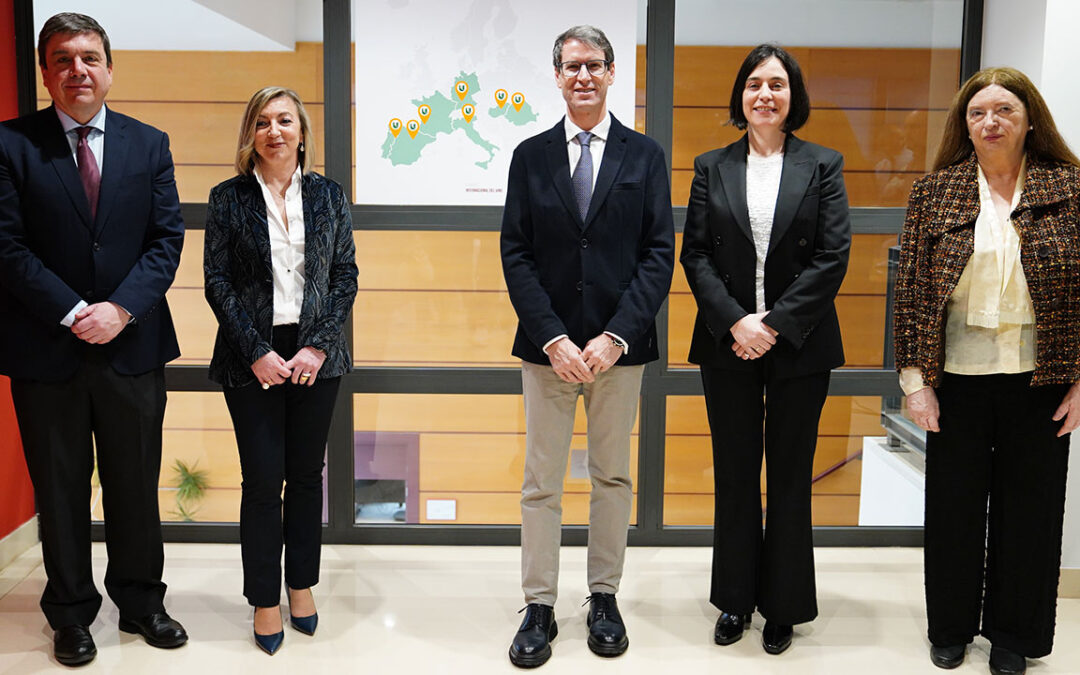
From left to right: Councillor Alberto Galiana, Rector Eva Sanz, President of La Rioja, Gonzalo Capellán; Carmen Novo, Vice-Rector for Internationalization; and Elena González Fandos, Head of Enorregion
EU-GIFT will involve 56,000 students and 3,000 academic staff from seven European universities to drive sustainability and innovation in the production of food and beverages with geographic identity.
Promoted by the European Commission’s European Universities Initiative and primarily funded by the Erasmus+ programme , the EU-GIFT university alliance is made up of seven universities from Spain, France, Hungary, Germany, Italy, Romania and Portugal, led by the University of La Rioja, with the aim of promoting sustainability and innovation in the production of food and beverages with geographical identity through shared degrees and research areas.
The EU–GIFT alliance (which stands for European University for Geographical Identity as a driver for Food systems Transition to sustainability ) is made up of the following institutions:
- University of La Rioja (Spain)
- Bordeaux Sciences Agro (France)
- Eszterházy Károly Catholic University (Hungary)
- Hochschule Geisenheim University (Germany)
- University of Agricultural Sciences and Veterinary Medicine Cluj-Napoca (Romania)
- University of Tras-os-Montes and Alto Douro (Portugal)
- University of Verona (Italy)
The new university alliance—which, together, brings together 56,000 students, 3,000 teaching and research staff, and 2,800 management and administration professionals—was presented on Tuesday, March 11, by the rector of the University of La Rioja, Eva Sanz, and the president of the La Rioja regional government, Gonzalo Capellán.
The creation of this alliance was promoted by the Enorregión project , funded by the Government of La Rioja, whose fundamental objectives include the green and digital transformation of the value chain for wine and quality food.
Enorregión is one of the pillars of La Rioja’s Transformation Plan , which is being developed within the UR within the framework defined by the Next Generation EU recovery fund and Spain’s Recovery, Transformation and Resilience Plan .
“The University of La Rioja will be leading the only European alliance dedicated to the field of beverages, differentiated quality foods, and sustainable agriculture,” says Rector Eva Sanz
UR Rector Eva Sanz emphasized that since the European Commission launched this initiative to create European universities in 2019, “65 alliances have been established in 35 countries: Spain is represented by 56 universities in 53 of these alliances, and only 13 Spanish universities are coordinators; the University of La Rioja is one of them . “
He stressed that “it represents a very important institutional and organizational challenge for the UR, and we are convinced that it will multiply the opportunities for our students, our teaching and research staff, and our technical, management, administrative, and service personnel . “
“It’s also an opportunity for La Rioja as a region to promote sustainable rural development by promoting the products with designations of origin that are our region’s hallmarks worldwide. The University of La Rioja will be leading the only European alliance dedicated to the field of beverages, high-quality foods, and sustainable agriculture,” concluded Eva Sanz.
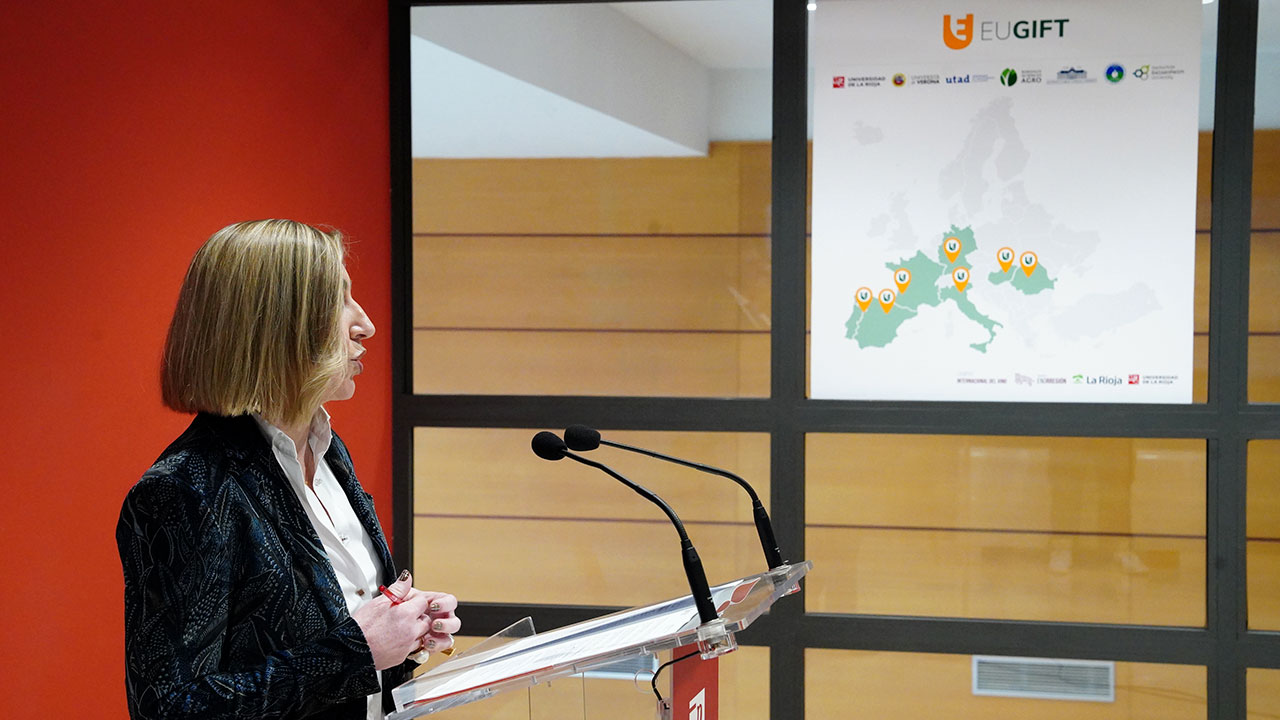
THE EU-GIFT ALLIANCE AND ITS KEY FIGURES
The EU-GIFT alliance is made up of seven universities from different European countries, whose university communities have the following numbers:
- University of La Rioja (Spain) – 4,583 students, 522 teaching and research staff, 305 technical, management, administrative and service staff.
- Bordeaux Sciences Agro (France) – 753 students, 45 teaching and research staff, 120 technical, management, administrative and service staff.
- Eszterházy Károly Catholic University (Hungary) – 6,143 students, 406 teaching and research staff, 466 technical, management, administrative and service staff.
- Hochschule Geisenheim University (Germany) – 1,718 students, 221 teaching and research staff, 367 technical, management, administrative and service staff.
- University of Agricultural Sciences and Veterinary Medicine Cluj-Napoca (Romania) – 5,463 students, 317 teaching and research staff, 451 technical, management, administrative and service staff.
- University of Trás-os-Montes and Alto Douro (Portugal) – 8,400 students, 606 teaching and research staff, 445 technical, management, administrative and service staff.
- University of Verona (Italy) – 29,300 students, 839 teaching and research staff, 738 technical, management, administrative and service staff.
In total, the EU-GIFT alliance has more than 56,000 students and 5,800 employees, establishing itself as a benchmark in education, research, and innovation in the European agri-food sector.
The funding obtained from the European Commission is 7,559,357 euros, of which the UR is responsible for 17.6% ( 1,334,846 euros ) for a period of 4 years.
The EU-GIFT project will fund 270 student mobility projects between the seven universities that make up the alliance, as well as 627 student mobility projects between academic and non-academic staff.
The Alliance is supported by a network of partners , which contribute to enhancing EUGIFT’s visibility throughout Europe. These are entities whose activities and objectives are related and aligned with those of the Alliance and which will play a key role in shaping the Alliance’s future and promoting its successful outcomes. In La Rioja, the following partners are supported:
- Riojan Association of Farmers and Ranchers – Agrarian Association of Young Farmers (ARAG-ASAJA)
- Federation of Businesses of La Rioja (FER)
- European Centre for Information and Promotion of Rural Environments -CEIP Rural-
- College of Economists of La Rioja
- Regulatory Council of the Qualified Designation of Origin Rioja (DOCa Rioja)
- Youth Council of La Rioja
- UR Student Council
Among the advantages that have been evident in the European Universities established in these six years are the establishment of interuniversity campuses that multiply opportunities for students, teaching staff, and researchers throughout Europe; the strengthening of transnational cooperation in higher education and research; cooperation in interdisciplinary areas; and the increase in the competitiveness and attractiveness of European universities globally.
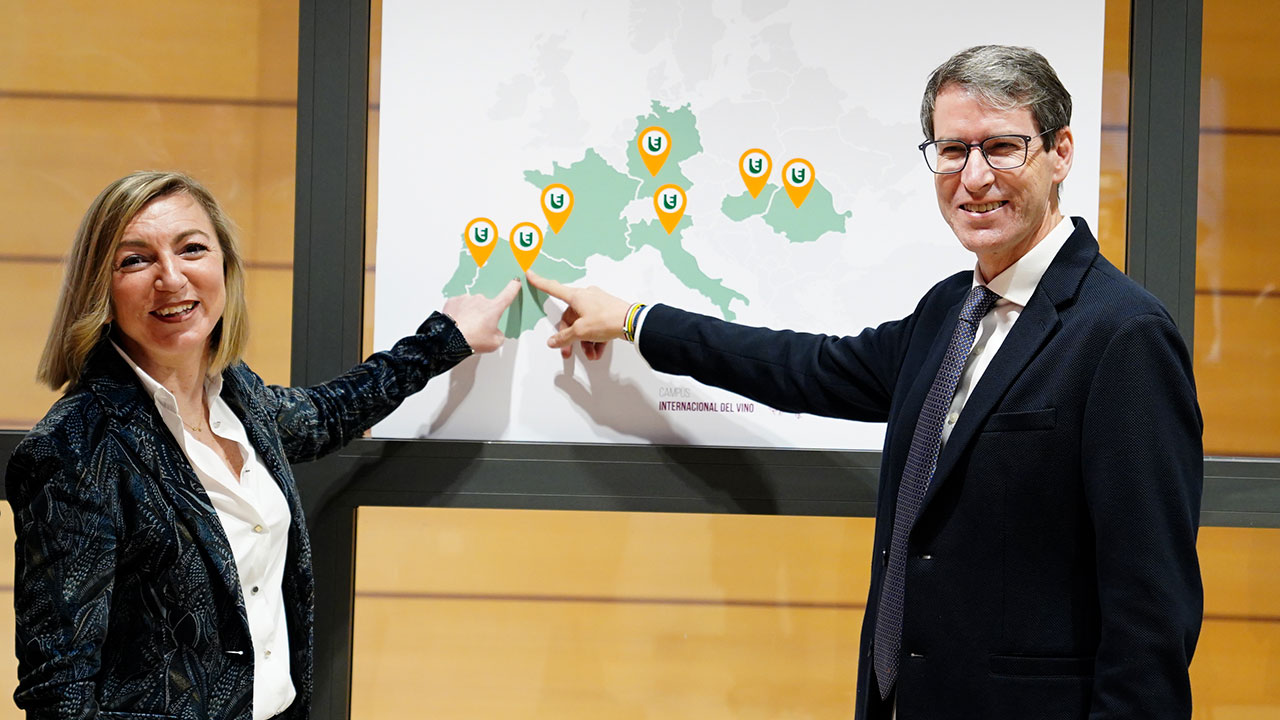
LEADING COUNTRIES IN FOODS WITH GEOGRAPHICAL INDICATION
